Added Time: Our Monthly College Search Newsletter
The Protect College Sports Act & Age-Based Eligibility: Summer 2026 Hot Topics in Recruiting
The basic news with the "Protect College Sports Act" is that legislation is advancing. It now has the backing of all 4 "Power Conferences" and is opposed by people who care about student-athletes, the Congressional Black Caucus and the Urban League https://nul.org/node/8297.
Passage does NOT seem imminent, but the bill has made it out of committee and has bipartisan support. Its current language would significantly damage most colleges financially https://sports.yahoo.com/articles/reworked-protect-college-sports-act-173144467.html, do little to "protect sports" and despite some marketing around Title IX and women's sports, the bill enshrines inequity as federal policy.
In other news, the "Age-based eligibility rule" adopted by the NCAA last month is having a rough go in court and the rushed implementation is unsurprisingly causing problems. I generally call this the "5-in5" rule, but someone in Indianapolis seems to think "age based" is better marketing. Either way, the rule is that students get 5 years of eligibility beginning with their high school graduation or 19th birthday, whichever comes first.
The latest legal defeat is here with the entire class of 2022 getting an injunction and it's very own transfer portal (signings announced TODAY) https://www.usatoday.com/story/sports/ncaaf/2026/08/02/ncaa-eligibility-injunction-clarification-colorado-judge-charlotte-sweeney-2022-5-for-5/91143073007/
As an aside, the 5-in-5 rule is NOT going to have a major impact on our work with most students. NCAA D2 is going to adopt it's own 5-in-5 rule for this fall, but D3 and the NAIA probably will not change. Overall, the impact of this rule is going to be seen in timeline changes for post-grads, international students and apprentice pros (think the "junior" system in ice hockey). The numbers coming to the NCAA will not change, but the timing for those niche students will.
Also, coaches will tell students they don't want to recruit that the new rule is closing off that opportunity. That should get the same response as "too late" or "transfer portal" gets now - namely the feedback is that for that coach at this moment, this student is not a fit (and nothing more).
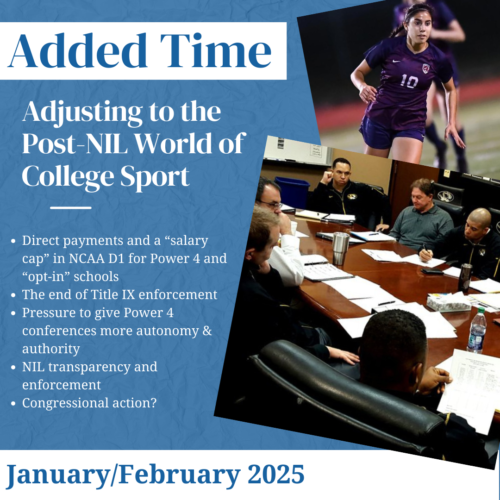
In other news, the rules around NIL continue to resist efforts by the NCAA to limit these deals. The College Sports Commission is no longer evaluating deals below $15,000... up from the previous $2,500 threshold. https://www.athleticbusiness.com/operations/governing-bodies/article/15828928/csc-updates-minimum-nil-deal-value-regulations-for-the-second-time-in-three-months. With the expectation that CSC can not withstand a lawsuit, the commission just approved a reworked deal for Nebraska football players worth $7.5 million https://lancasteronline.com/sports/football/college/college-sports-commission-approves-reworked-nil-deals-worth-total-of-7-5m-for-18-nebraska/article_17029135-f81c-5c0a-97a0-4402bb7589be.html?itm_source=parsely-api&utm_source=article&utm_medium=summary&utm_campaign=What%20to%20Read%20Next.
What this means is that without legislation, the bidding for Division 1 elite athletes is going to continue with minimal guardrails. This is actually GOOD news for colleges as it is much easier to fundraise to pay student-athletes than fund facilities and coaching salaries. In this case a rising tide is lifting all boats.
Ultimately, the NCAA would very much like congress to pass legislation that allows it to enforce its own rules and manage the athletic "arms race" in a way that protects student-athletes and colleges themselves (given that the NCAA voters are college presidents, the finances of colleges are far and away the biggest worry). However, current NCAA leadership is not equipped to build a meaningful consensus about how to do that and there is pressure to "do something" without as much consideration as I would prefer about what that something actually is. The best case scenario in my view is maintaining the status quo - where students can earn their market value with the downside of less overall stability for colleges - until the colleges can figure out an "ask" that protects both students and the colleges effectively with trade offs that ensure equity and sustainability rather than letting a few of the wealthiest colleges decide what is good for themselves in the moment and impose it on everyone else without much thought about the lasting impact.
The takeaway should be... there is little change for most students. Whew, that was a long ride back to the starting gate... but it bears watching to see how federal legislation progresses.
As always, if you are looking for the individualized or institutional consulting help that puts you ahead of your peers, check out our services here! You can make an initial appointment through the link on our homepage! School administrators and counselors access our free resources, appointments and programs for school collaboration here.
For more information, contact Dave Morris, College Counselor & CEO, College Athletic Advisor, dave@collegeathleticadvisor.com or phone: (719) 248-7994
©2026 All Rights Reserved https://collegeathleticadvisor.com/addedtime/
Can we talk?
Of course!! Schedule an initial consult, email; or call (719) 248-7994 and let's discuss how we can collaborate!